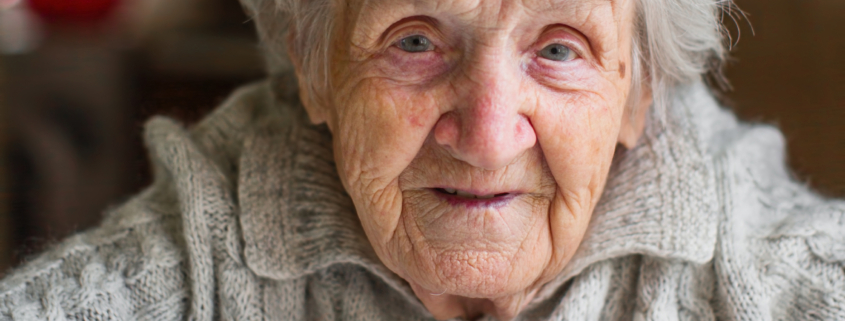
The landscape of unsheltered homelessness for seniors in the U.S. is increasingly concerning, with both current trends and future projections indicating significant challenges.
Download White Paper PDF
At Lake City Partners we experience a growing number of seniors who have no clear pathway to sustainable housing. As we prepare to open our new Senior Women’s Shelter in Kenmore, WA I wanted to share some of the driving factors behind this new shelter investment.
A common client profile for this group would be similar to what one of our recent clients has experienced. Miss McArdle is in her 60s and came to our Aurora Oaks enhanced shelter from living in her vehicle.
Her story goes like this:
I’m a hard working American who has provided for myself all my life. I’ve paid my taxes, didn’t get in trouble, and earned my social security. I didn’t have the kind of jobs that came with a pension, or a 401k, or paid a lot of money – but I sure worked my 40 hours a week! Today, I get about $1,088 a month in social security and $142 in food stamps. Try living on that. I don’t have mental health issues to qualify for the free or very low cost housing and these supposed ‘affordable’ apartments want $800 or more a month. Where am I supposed to live?
For clients like Miss McArdle, we don’t have an easy answer or solution to their question.
One path forward we see is through group living or shared housing solutions. We are currently exploring options such as master leasing and shared living homes that are supported by fundraising and grants to ‘close the gap’ for folks like who are able and willing to pay $500 or $600 a month but need help getting to the $800 or $1,000 needed to actually stay housed in a sustainable and resilient manner while still being able to afford food, healthcare needs, and basic necessities,
Please continue reading for more information about how Seniors are experiencing unsheltered homelessness.
Current Landscape
Increasing Numbers: The number of unsheltered seniors experiencing homelessness has been rising. This demographic is growing faster than younger populations within the homeless community. Factors such as the aging of the baby boomer generation, fixed incomes, and inadequate retirement savings contribute to this trend.
Health and Vulnerability: Older adults experiencing homelessness face severe health challenges. They are more likely to suffer from chronic conditions, mental health issues, and disabilities. The lack of access to regular medical care exacerbates these conditions.
Economic Factors: Many seniors live on fixed incomes, such as Social Security, which often do not keep pace with rising housing costs. The lack of affordable housing options, especially for those with limited means, is a critical driver of senior homelessness.
Social Isolation: Seniors experiencing homelessness often lack social support networks. The loss of family, friends, and community ties can lead to isolation, making it harder for them to find resources and support.
Barriers to Assistance: Older adults may face unique barriers when seeking assistance, such as mobility issues, lack of familiarity with technology needed to access resources, and ageism. Shelter environments may also be unsuitable for their needs.
Future Projections
Growing Senior Population: The U.S. population is aging, with the number of people aged 65 and older expected to increase significantly. This demographic shift will likely result in a higher number of seniors experiencing homelessness unless substantial interventions are made.
Economic Instability: Continued economic pressures, such as rising housing costs, inflation, and potential cuts to social safety nets, could exacerbate the issue. The financial insecurity of many aging Americans means they are at risk of becoming homeless if they face unexpected expenses or a loss of income.
Healthcare Needs: As the population ages, the healthcare needs of homeless seniors will increase. This will put additional pressure on health and social services systems, which are often already stretched thin.
Policy and Funding Challenges: Addressing senior homelessness will require targeted policies and increased funding. This includes investments in affordable housing, healthcare, and supportive services tailored to the needs of older adults. The political and economic climate will heavily influence the availability of resources for these initiatives.
Potential Solutions
Affordable Housing Development: Increasing the supply of affordable and senior-specific housing is crucial. This can include subsidized housing, co-housing models, and supportive housing that offers on-site services.
Enhanced Social Safety Nets: Strengthening programs like Social Security, Medicare, and Medicaid can help ensure that seniors have the financial resources and healthcare access they need.
Integrated Services: Developing integrated care models that combine housing with healthcare and social services can address the complex needs of homeless seniors more effectively.
Community Support Programs: Expanding community-based programs that provide social support, outreach, and case management can help prevent homelessness among at-risk seniors and assist those who are currently homeless in finding stable housing.
Policy Advocacy and Awareness: Increasing awareness and advocacy efforts around senior homelessness can lead to more robust policy responses and community involvement.
In summary, the current and future landscape of unsheltered homelessness for seniors in the U.S. presents significant challenges that require comprehensive and coordinated efforts to address. With an aging population and economic pressures, proactive measures are needed to prevent and mitigate the impact of homelessness on this vulnerable group.
William Towey is the Executive Director of Lake City Partners Ending Homelessness, a Nonprofit organization serving unsheltered people in North Seattle/King County.
Sources and citations related to the current and future landscape of unsheltered homelessness for seniors in the U.S:
Increasing Numbers and Demographics:
National Alliance to End Homelessness. “The State of Homelessness in America.” Available at: endhomelessness.org
U.S. Department of Housing and Urban Development. “The 2020 Annual Homeless Assessment Report (AHAR) to Congress.” Available at: hudexchange.info
PBS Newshour. More seniors are becoming homeless, and experts say the trend is likely to worsen
Health and Vulnerability:
Brown, R. T., Hemati, K., Riley, E. D., Lee, C. T., Ponath, C., Tieu, L., Guzman, D., & Kushel, M. B. (2017). “Geriatric Conditions in a Population-Based Sample of Older Homeless Adults.” The Gerontologist, 57(4), 757-766. Available at: academic.oup.com
Economic Factors:
Economic Policy Institute. “The State of American Retirement: How 401(k)s Have Failed Most American Workers.” Available at: epi.org
Joint Center for Housing Studies of Harvard University. “Housing America’s Older Adults 2019.” Available at: jchs.harvard.edu
Social Isolation:
AARP. “Social Isolation: Myths vs. Realities.” Available at: aarp.org
National Health Care for the Homeless Council. “Elder Homelessness: Historical Context and Resources.” Available at: nhchc.org
Barriers to Assistance:
National Coalition for the Homeless. “Aging and Homelessness.” Available at: nationalhomeless.org
U.S. Interagency Council on Homelessness. “Homelessness in America: Focus on Older Adults.” Available at: usich.gov
Future Projections:
Administration for Community Living. “2020 Profile of Older Americans.” Available at: acl.gov
U.S. Census Bureau. “Demographic Turning Points for the United States: Population Projections for 2020 to 2060.” Available at: census.gov
Potential Solutions:
Corporation for Supportive Housing. “Aging in Place: Permanent Supportive Housing for Older Adults.” Available at: csh.org
National Low Income Housing Coalition. “The Gap: A Shortage of Affordable Homes.” Available at: nlihc.org


 You are invited to the Valentine’s Day Opening Ceremony of the Kenmore Senior Women’s Shelter on February 14, 2025!